At first glance, starting a trucking company seems like a logical step—you have a truck, you have customers or at least contacts, and you’re ready to get to work. The reality, however, is that a complex administrative, regulatory, and organizational framework stands between the idea and the actual execution of an international route. This is precisely where the role of a professional outsourcing partner like RTS proves to be crucial.
In this case study, we examine a real-life scenario: an entrepreneur with no prior experience in the transportation sector decides to start his own international freight forwarding company. The motivation is there, the investment has been made, but there is a lack of a structured understanding of the procedures, regulations, and operational requirements. Our task was to ensure a smooth start—without delays, without penalties, and without unnecessary expenses.
Initial situation: enthusiasm without an operational framework
The client contacted RTS after he had already purchased his first vehicle and registered a business. Up to that point, the process seemed straightforward. From there on, however, the questions began:
- How do you obtain a license for international freight transport?
- What are the financial stability requirements?
- What documents must be submitted to the Road Administration Agency?
- What are the requirements regarding tachographs, driver cards, and digital records?
- How does the toll system work in Bulgaria and the EU?
- How do you organize your first international course without the risk of violating regulations?
The lack of prior experience posed a real risk of:
- incorrectly submitted documents;
- delay in issuing a license;
- penalties due to ignorance of regulatory requirements;
- ineffective planning of the first courses.
It was clear from our very first conversation that if the client went it alone, they would waste time and money and would likely run into administrative problems within the first few months.
The main problem: a complex regulatory environment and a lack of procedural clarity
The transportation sector is one of the most heavily regulated in Europe. The requirements are multifaceted and include:
- licensing of the carrier;
- proof of financial stability;
- appointment or contract with a transportation manager;
- registration of vehicles under the license;
- compliance with regulations on working hours and breaks;
- reporting of tolls and road user charges in various countries;
- maintenance of tachograph data archives;
- International insurance and CMR documentation.
For someone with no experience in the sector, these requirements are not just a formality—they are a barrier to market entry.
The client was unclear about:
- the sequence of actions;
- deadlines by institution;
- the risks associated with failing to submit a specific document;
- the administrative checks that follow the start.
This created uncertainty and posed a real risk that the first flight would be conducted in violation of regulations.
RTS’s approach: taking charge of the entire administrative and organizational process
Our approach to working with newly established transportation companies is structured into several clearly defined stages.
A comprehensive analysis of the current situation
We started with a detailed audit:
- company registration;
- available assets (vehicles);
- chosen business model – domestic or international transport;
- whether a transportation manager is present or absent;
- Target markets (EU / third countries).
The goal was to develop a personalized plan, not to apply a standard template.
Establishment and structuring of the company in accordance with the requirements
Although the company was registered, key elements were missing:
- correct scope of business;
- license application documents;
- financial stability ensured in accordance with the regulations;
- a clearly defined internal structure.
RTS reported:
- review and amendments to the articles of incorporation;
- preparation of declarations and attachments;
- coordination with institutions;
- organization of bank documents to prove capital.

Preparation and submission of documents for a license to transport goods
The international transport license is the primary legal instrument without which the business cannot operate.
The process includes:
- compiling documentation;
- proof of financial stability;
- hiring/contracting a transportation manager;
- certificates of criminal record and professional competence;
- submission of documents to the Road Administration Agency;
- tracking deadlines.
RTS handled the entire process—from preparation to obtaining the license.
The client did not have to communicate directly with the institutions—we acted as their representative and coordinator.
Registration of vehicles under the license
Once the license has been issued, the vehicles must be registered under it.
This requires:
- submission of documents for the specific motor vehicles;
- technical inspection;
- valid insurance policies;
- synchronization of data in the registers.
RTS is organizing:
- preparation of all documentation;
- coordination with the insurer;
- verification of compliance with regulatory requirements.
Consulting on key regulations and operational obligations
An administrative launch is not enough. The real risk lies in operational activities.
That is why we conducted a structured consultation on:
- Regulation 561/2006 (working time and rest periods);
- requirements for a digital tachograph;
- data backup;
- inspections;
- documentation for international transport;
- CMR waybills;
- cabotage obligations.
The client received a clear guide with specific steps and checklists.
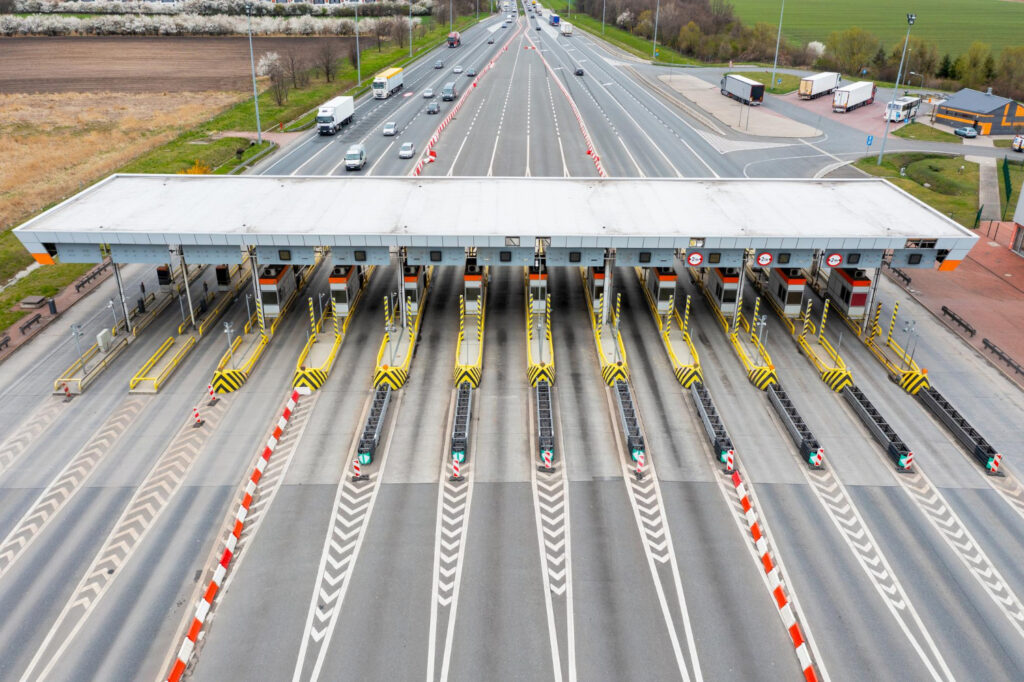
Toll fees and international road tolls
One of the critical issues for new companies is toll systems.
RTS advises the client on:
- registration in the Bulgarian toll system;
- selection of an onboard device;
- international taxi service providers;
- advance payment and reporting;
- Avoiding penalties for incorrectly declared routes.
This prevented potential fines right from the very first trips.
Preparing for the first international courses
The first course is a test not only for the driver but also for the organization.
RTS helps to:
- checking the driver’s documents;
- license validity and copies;
- insurance;
- proper completion of the CMR;
- route planning;
- in accordance with the regulations of the respective countries.
The result: a structured start without penalties or omissions
Thanks to the comprehensive outsourcing model:
- The license was issued on time.
- The vehicles were properly registered.
- No administrative errors were made.
- The first international flight was completed without incident.
- The company began operations with a clear internal structure.
From day one, the client had access to:
- processes;
- control mechanisms;
- regulatory clarity;
- a professional back-office partner.
The long-term impact of a strong start
The greatest value wasn’t simply in issuing a license. The real benefit was:
- reduced administrative risk;
- time saved;
- avoiding fines;
- faster time to market;
- confidence when communicating with clients and institutions.
When a transportation company gets off to a good start, it doesn’t begin with crises, but with control.
The Role of RTS as a Strategic Partner
In this case, RTS was not merely a consultant. We were:
- Administrative Coordinator;
- regulatory expert;
- process architect;
- Operations Advisor.
Our outsourcing model allows transport company owners to focus on their business—finding customers, building a fleet, and expanding operations—while we handle the regulatory burden.
Conclusion
Starting a transportation company without experience carries real risks. The administrative framework is complex, and the penalties are significant. In this case, RTS transforms uncertainty into a structured process.
The company got off to a smooth start, with no delays or penalties. From day one, its operations were built on a solid regulatory foundation.
That’s the difference between a chaotic start and a professionally structured beginning.
RTS doesn’t just provide support—we build sustainable transportation businesses from the ground up.